

+91 7743979315
info@stvincentngp.edu.in
Connect with us
Bachelor of Computer Applications (BCA)
About Us
In an era driven by digital transformation and rapid technological advancement, computing education is central to innovation and growth. At St. Vincent Pallotti College of Engineering & Technology (SVPCET), Nagpur, our BCA and MCA programs are designed to meet industry demands for skilled software professionals who can think logically, adapt to emerging technologies, and solve real-world problems. With an industry-relevant curriculum, hands-on learning, projects, internships, and strong academic mentoring, Pallotti prepares students for successful careers in software development, IT services, data-driven domains, and higher studies in a dynamic global technology ecosystem.
* Approved by AICTE & DTE, University approvals pending
Program Overview
The Bachelor of Computer Applications (BCA) program is designed to provide a strong foundation in computing principles, programming, and modern software development practices. The curriculum integrates theoretical knowledge with practical skills through laboratory work, projects, and internships
The program aims to develop graduates who are capable of applying computing concepts to solve real-world problems and contribute effectively in the field of information technology.
Vision:
- To develop ethically grounded and technically competent computing professionals who contribute to society through innovation and integrity.
Mission:
- To empower students with strong computing foundations, professional discipline, and value-based education for successful careers through lifelong learning.
Program Educational Objectives (PEOs)
Computer Applications graduates will be able to
- PEO1 :
Build strong computing foundations and analytical abilities enabling graduates to establish successful careers in software & technologies or pursue higher studies.
- PEO2 :
Develop professional discipline, ethical values, teamwork, and effective communication skills for responsible and productive participation in diverse work environments.
- PEO3 :
Foster lifelong learning, adaptability to emerging technologies, and innovative thinking for continuous professional growth and societal contribution.
Program Outcomes (POs)
- PO1: Engineering Knowledge:
Apply knowledge of mathematics, natural science, computing, engineering fundamentals and an engineering specialization. - PO2: Problem Analysis:
Identify, formulate, review research literature and analyze complex engineering problems reaching substantiated conclusions with consideration for sustainable development - PO3:Design/Development of Solutions:
Design creative solutions for complex engineering problems and design/develop systems/components/processes to meet identified needs with consideration for the public health and safety, whole-life cost, net zero carbon, culture, society and environment as required. - PO4: Conduct Investigations of Complex Problems:
Conduct investigations of complex engineering problems using research-based knowledge including design of experiments, modelling, analysis & interpretation of data to provide valid conclusions. - PO5: Engineering Tool Usage:
Create, select and apply appropriate techniques, resources and modern engineering & IT tools, including prediction and modelling recognizing their limitations to solve complex engineering problems. - PO6: The Engineer and The World:
Analyze and evaluate societal and environmental aspects while solving complex engineering problems for its impact on sustainability with reference to economy, health, safety, legal framework, culture and environment. - PO7: Ethics:
Apply ethical principles and commit to professional ethics, human values, diversity and inclusion; adhere to national & international laws. - PO8: Individual and Collaborative Team work:
Function effectively as an individual, and as a member or leader in diverse/multi-disciplinary teams. - PO9: Communication:
Communicate effectively and inclusively within the engineering community and society at large, such as being able to comprehend and write effective reports and design documentation, make effective presentations considering cultural, language, and learning differences. - PO10: Project Management and Finance:
Apply knowledge and understanding of engineering management principles and economic decision-making and apply these to one’s own work, as a member and leader in a team, and to manage projects and in multidisciplinary environments - PO11: Life-Long Learning:
Recognize the need for, and have the preparation and ability for i) independent and life-long learning ii) adaptability to new and emerging technologies and iii) critical thinking in the broadest context of technological change.
Program Specific Outcomes (PSOs)
- PSO1: Engineering Knowledge:
To design, develop, and deploy efficient software solutions using appropriate programming languages, databases, and emerging technologies to address real-world computing problems.
- PSO2:
To analyze, implement, and manage intelligent computing systems incorporating Artificial Intelligence and Machine Learning techniques, while adhering to professional ethics, cybersecurity principles, and industry standards
Semester 1 :
Semester 2 :
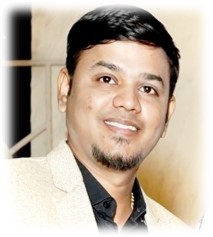
Dr. Fr Stanly Wilson
stanlywilson@stvincentngp.edu.in

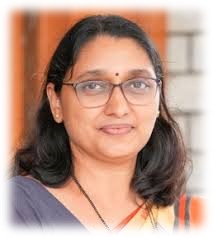
Dr. Rupali Wagh
Associate Professor & Head of Department,Department of Computer Science,
Dr. Priti S. Voditel
Associate Professor & Head of Department, Department of Computer Science and Engineering
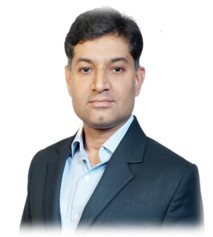
Mr. Shyam Khakare
Director
Mr. Rupesh Chamatkar
Assistant General Manager